Expert Guide: How Much Water to Drink Each Day by Age

Why hydration needs change with age

Water is easy to overlook.
With coffee in the morning, fizzy drinks at lunch, and another caffeine boost in the afternoon, plain water often takes a back seat.

But health experts say hydration plays a far bigger role in daily wellbeing than many people realize. From brain function to temperature control, water supports nearly every system in the body.

According to research cited by the University of California, water helps deliver nutrients to cells, remove waste, protect joints and organs, and regulate body temperature. That’s why experts consistently recommend water as the default drink of choice.

While general guidelines suggest men aim for around 13 cups of fluids per day and women about nine, those figures don’t tell the full story. Age, growth, metabolism, and lifestyle all influence how much water the body actually needs.

Speaking to UK media, medical expert Dr Jonathan Webster explained how hydration requirements shift throughout life — and why many people may be falling short.

Water is vital to our health.
Water is vital to our health (Getty Stock Images)

Teenagers and rapid growth

Teenagers have higher water needs due to growth spurts, hormonal changes, and increased physical activity.

For boys aged 14 to 18, the recommendation is 1.6 to 1.9 liters per day.
Girls in the same age group should aim for around 1.5 liters daily.

Adequate hydration helps maintain energy levels, supports muscle function, and aids metabolism during this critical stage of development.

Children aged 4 to 8

Young children need consistent hydration to support growth and development.
Dr Webster advises that children in this age range should drink around 1.2 liters of water per day, which equals roughly six to eight small glasses.

Hydration at this stage supports brain function, digestion, and temperature regulation. Because children may not always recognize thirst, regular reminders are important.

Children need to be drinking around 1.2 liters of water a day.
Children need to be drinking around 1.2 liters of water a day (Getty Stock Images)

Adults under 60

Hydration becomes especially important in adulthood as work, exercise, and stress increase demands on the body.

Women under 60 are generally advised to drink around 1.6 liters per day, while men should aim for about 2 liters.

Dr Webster notes that proper hydration supports kidney function, concentration, and temperature control. However, individual needs may rise with exercise, hot climates, or diets high in salt or protein.

Adults over 60 and dehydration risk

Older adults are particularly vulnerable to dehydration.
As people age, the body’s thirst response becomes less sensitive, meaning they may not feel thirsty even when fluid levels are low.

Experts recommend adults over 60 continue to aim for 1.6 to 2 liters per day, unless otherwise advised by a healthcare professional.

The Mayo Clinic warns that common signs of dehydration include dark urine, reduced urination, fatigue, dizziness, confusion, and dry skin that doesn’t bounce back when pinched.

Adults need to be drinking the most water.
Adults need to be drinking the most water (Getty Stock Images)

Factors that affect individual needs

Water requirements aren’t fixed. Exercise, illness, medication, alcohol intake, and even diet all influence hydration levels.

Foods with high water content — such as fruits, vegetables, and soups — contribute to fluid intake. At the same time, caffeine and alcohol can increase fluid loss if consumed in excess.

Listening to the body and maintaining regular water intake throughout the day is often more effective than relying on thirst alone.

Making water a daily habit

Health experts suggest keeping water easily accessible, pairing drinking water with daily routines, and choosing water over sugary drinks whenever possible.

Small changes can make a noticeable difference in energy, focus, and overall wellbeing.

While exact needs vary, staying consistently hydrated is one of the simplest steps people can take to support long-term health.

Health Disclaimer
This article is for informational purposes only and is not intended as medical advice. Always consult a qualified healthcare professional before making any changes to your health, diet, or treatment.

Featured Image Credit: Getty Stock Images

Topics: Food and DrinkHealthLife

Doctor Reveals 5 Cancer Symptoms Often Mistaken for Other Illnesses

Why bowel cancer symptoms are frequently missed

Many people assume cancer symptoms are always obvious.
In reality, some of the most common warning signs are easy to dismiss as everyday health problems.

That misunderstanding can delay diagnosis, and doctors say it’s happening more often than many realise.

Awareness of bowel cancer has improved over the decades, helping survival rates overall.
However, diagnoses among people under 50 are rising, according to data from the American Cancer Society.

At the same time, surveys suggest around one in three adults struggle to recognise early symptoms, increasing the risk of late detection.

35 percent of people fail to recognize bowel cancer symptoms.
35 percent of people fail to recognize bowel cancer symptoms (Getty Stock Images)

Changes in bowel habits

A shift in how often you go to the toilet, or how your stools look, can seem harmless.
Many people put it down to diet, stress, or conditions like irritable bowel syndrome.

Doctors warn that ongoing diarrhoea, constipation, or feeling like your bowel hasn’t fully emptied should not be ignored, especially if it lasts several weeks.

Blood in your stool

Seeing blood can be alarming, but it’s often brushed off as piles or small tears.
While those causes are common, blood in the stool can also be a sign of bowel cancer.

Medical professionals stress that any unexplained bleeding should be checked, even if there is no pain.

A change in bowel habits could be a warning sign for cancer.
A change in bowel habits could be a warning sign for cancer (Getty Stock Images)

Persistent bloating

Bloating is extremely common and usually linked to digestion or hormonal changes.
That’s why it’s often overlooked as a potential warning sign.

Experts say persistent, unexplained bloating that doesn’t come and go may need further investigation, particularly if it’s new or worsening over time.

Prolonged fatigue

Feeling tired is easy to explain away in a busy life.
Poor sleep, stress, or diet are usually blamed first.

However, bowel cancer can cause internal bleeding that leads to anaemia, leaving people feeling constantly exhausted even after rest.

Bowel cancer can cause fatigue due to anaemia.
Bowel cancer can cause fatigue due to anaemia (Getty Stock Images)

Unexplained weight loss

Weight changes can happen for many reasons.
But losing weight without changing diet, exercise, or routine is considered a red flag.

Doctors say unexplained weight loss can signal several serious conditions, including bowel cancer, and should always be assessed by a healthcare professional.

Why early detection matters

In its earliest stages, bowel cancer may cause only mild or vague symptoms.
That makes awareness crucial.

Spotting changes early gives doctors more treatment options and significantly improves outcomes. What’s often overlooked is that acting on small symptoms can make a life-saving difference.

When to seek medical advice

Health experts encourage people to trust their instincts.
If something feels unusual, persistent, or out of character, it’s worth booking a GP appointment.

No symptom is too minor to mention, and doctors stress that early conversations can prevent far more serious problems later on.

Health Disclaimer
This article is for informational purposes only and is not intended as medical advice. Always consult a qualified healthcare professional before making any changes to your health, diet, or treatment.

Featured Image Credit: Getty Images/AndreyPopov

Topics: HealthCancerLife

Woman Who ‘Died for 32 Seconds’ Says She Saw the Future and Has a Warning

What happens after we die is one of humanity’s oldest questions. For some, the mystery is philosophical. For others, it becomes deeply personal.

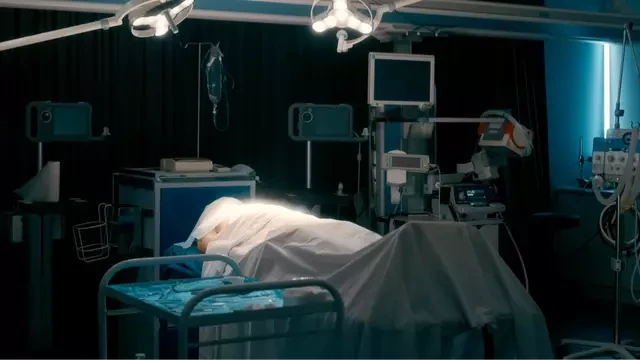
Angela Harris believes she briefly crossed that boundary. After being clinically dead for 32 seconds, she says she returned with vivid memories and a warning about the future of humanity.

Her account has sparked fascination, skepticism, and debate in equal measure.

The moment everything changed

Harris’ near-death experience happened in 2015 during a medical test designed to investigate sudden fainting episodes. While undergoing a tilt-table test, she suffered seizures and briefly lost all signs of life.

Medical staff were able to revive her quickly. But Harris says what she experienced in those seconds felt far longer and far more detailed than time would suggest.

She has since described the event as life-altering, not just physically, but spiritually.

A profound personal awakening

Following her recovery, Harris says she struggled to return to her old sense of normality. The experience left her questioning reality, identity, and purpose.

She later described the episode as a “spiritual awakening,” saying it reshaped how she understood human existence. Today, she works as a spiritual coach, a role she attributes directly to what she experienced during that moment.

According to Harris, the near-death experience revealed what she believes is a deeper truth about consciousness beyond the physical world.

Angela Harris had a near-death experience.
Angela Harris had a near-death experience (Getty Stock Photo)
Familiar sights and unexpected visions

Like many people who report near-death experiences, Harris says she encountered deceased relatives. That part, she admits, felt comforting and familiar.

What came next, however, surprised her. Harris claims she was shown scenes that went far beyond personal memories or emotional reassurance.

She says she was transported to other worlds and witnessed life on different planets, where she appeared to exist in another form.

Seeing life beyond Earth

Harris has described viewing herself living as what many would label an alien species. To her, it did not feel foreign or frightening.

Instead, she explains it as another version of existence, another soul living a parallel life in a different place. She has said the experience felt ordinary rather than fantastical.

This aspect of her story has drawn particular attention, especially among those interested in consciousness and the possibility of life beyond Earth.

A troubling glimpse of the future

Alongside these visions, Harris says she was shown a possible future for humanity. This is where her account takes a darker turn.

She claims she saw a world shaped by large-scale conflict, where wars drastically reduced the global population. In this future, societies had retreated from large, complex systems into smaller, more localized communities.

Harris describes it not as total collapse, but as a forced reset brought on by prolonged human conflict.

The warning she took from it

Harris says the vision was not meant to inspire fear, but awareness. In her view, the future she saw was shaped by human choices rather than fate.

She believes the message was about responsibility, cooperation, and how easily progress can be undone when division escalates unchecked. The experience, she says, left her with a sense of urgency rather than doom.

For Harris, the warning was less about prediction and more about possibility.

A warning has been issued for humanity.
A warning has been issued for humanity (Getty Stock Photo)
Why stories like this resonate

Near-death experiences remain difficult to explain. Scientists often point to neurological responses under extreme stress, while others see them as deeply personal or spiritual events.

What’s often overlooked is why these stories resonate so strongly. They touch on shared fears about death, meaning, and the future of humanity itself.

Harris’ account sits at the intersection of belief and uncertainty, where personal experience meets universal questions.

Belief, skepticism, and interpretation

Harris does not claim her experience proves anything definitively. She presents it as her truth, shaped by what she felt and saw in those 32 seconds.

Some will view her story as symbolic. Others will see it as literal. Many will remain unconvinced.

What is clear is that her experience continues to shape her life and worldview, and for those who hear it, it raises uncomfortable but enduring questions about where humanity may be headed—and how much control we truly have over that path.

Featured Image Credit: Getty Images/Sean Anthony Eddy

Topics: HealthLife