
COVID is no longer disrupting daily life the way it did in 2020, but it has not disappeared. New offshoots are still emerging, and two names that caught attention in 2025 were the unofficially nicknamed Nimbus and Stratus variants.
Health agencies have not issued special rules just for those variants. But experts say the advice is familiar for anyone who develops symptoms that could signal COVID: stay home when sick, use added precautions around others, improve ventilation or choose outdoor settings, and keep up strong hygiene habits.
What Stratus and Nimbus actually are
Nimbus is the nickname commonly used for NB.1.8.1, a SARS-CoV-2 variant that the World Health Organization designated as a Variant Under Monitoring in May 2025. WHO said the added public-health risk was low at the global level and noted that updated vaccines were still expected to remain effective against symptomatic and severe disease.
Stratus is an unofficial nickname used for XFG, another monitored SARS-CoV-2 variant that expanded during 2025. WHO’s tracking dashboard continued to list both NB.1.8.1 and XFG among variants being watched, while the CDC said new variants are expected to keep emerging as the virus evolves.

The symptoms look broadly familiar
Most symptoms linked to recent COVID variants remain similar to those seen with other Omicron-lineage strains. The CDC says COVID symptoms can include fever, cough, sore throat, fatigue, body aches, congestion, headache, nausea, vomiting, and diarrhea.
Some coverage around Nimbus focused on reports of a very painful sore throat, sometimes described informally as “razor blade throat.” That symptom may happen, but public-health guidance still centers on the standard COVID playbook rather than a unique response for one strain.
Step one: Stay home if you feel unwell
The first recommendation is the simplest. If you develop symptoms of a respiratory virus, the CDC says you should stay home and away from others, especially while you have a fever or feel unwell. The agency’s guidance is symptom-based, not variant-based.
That matters because staying home during the most contagious phase can reduce the chance of passing the virus to relatives, co-workers, or anyone at higher risk of severe illness.
Step two: Wear a well-fitting mask around other people
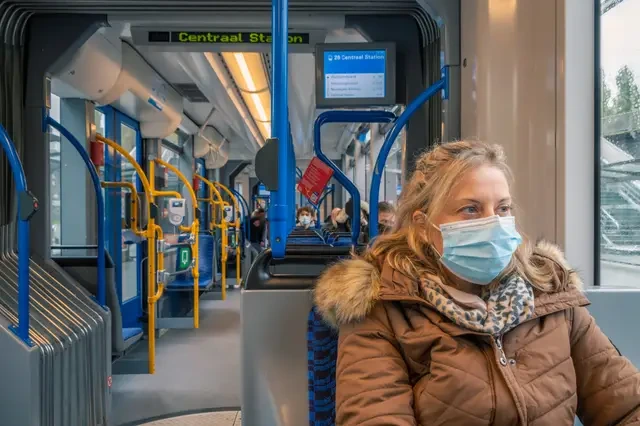
Masks remain one of the CDC’s added prevention tools, particularly in crowded spaces, when illness is rising in the community, or when you are around people who may be more vulnerable. Experts say a well-fitting mask can lower the spread of respiratory droplets and particles.
For someone with symptoms, that makes masking one of the most practical steps if avoiding contact completely is not possible.
Step three: Avoid crowded indoor settings and improve airflow
The CDC also recommends cleaner air and extra space as useful protections. In practice, that can mean opening windows, spending time outdoors when possible, or avoiding packed indoor environments while you are sick.
Here’s where things get important: crowded, poorly ventilated spaces still create more opportunity for respiratory viruses to spread, even when a specific variant is not considered unusually severe.
Step four: Keep up hand and respiratory hygiene
The final step is the least dramatic and still one of the most effective. The CDC continues to advise people to cover coughs and sneezes, wash hands regularly, and use sanitizer when soap and water are not available.
That advice may sound routine, but it remains part of the core guidance for reducing spread at home, at work, and in public.
Why the guidance still matters
The main message from health authorities is not that Stratus or Nimbus require panic. It is that COVID remains part of the broader respiratory-virus landscape, and the familiar precautions still work. The CDC says staying up to date with vaccination also remains the best way to reduce the risk of severe disease, hospitalization, and death.
Featured Image Credit: Getty Images/Maskot
Topics: Coronavirus, US News, Health
